


By Dr. Rod Berger
New here? I’m Dr. Rod Berger, the newest voice on The Dangerous Ones Network. My work has always been handing someone else the microphone: more than 4,000 interviews across five continents, many with people whose names will never make the news. On Help Me Understand, you bring the question to The People’s Hotline, and I go find where we’ve seen it before. Some episodes I record alone. On others, my friend Marshall Herskovitz, the Emmy-winning writer, director and producer who co-created thirtysomething, joins me.
Live tonight: I’ll be on with The Dangerous Ones at 10:45 p.m. Eastern as part of the network’s Election Day coverage. Watch it live on YouTube.

A caller to The People's Hotline got their cost-of-living raise and felt worse for it:
"With the cost of living raise this year, adjustment, mine went up and went into a higher tax bracket. … So tell me what the hell is going on and what's going to happen in January?"
It deserves a straight answer.
So let's look at how we got here.
Twenty-two dollars and fifty-four cents
Social Security's first monthly check, number 00-000-001, carried the date January 31, 1940, and went to Ida May Fuller of Ludlow, Vermont. She had taught school and then worked as a legal secretary. The check came to $22.54.
Before 1940, the program paid only one-time lump sums. The earliest reported applicant, a Cleveland motorman, received 17 cents.
Fuller had paid $24.75 in payroll taxes over about three years. She lived to 100 and collected $22,888.92. That is a fact about the program's very first retirees, who paid in only briefly, and it says nothing about the system today.
Her $22.54 did not change for ten years. Every increase needed a vote of Congress, and the first general one came in 1950.
Raises on autopilot, then a tax line
A law signed on July 1, 1972 made the raises automatic, and the first automatic increase arrived in 1975. Since 1983, those raises have landed in January.
That same year, the 1983 Amendments did something new. Starting in 1984, up to half of a retiree's benefit became taxable once their combined income passed $25,000 for a single filer or $32,000 for a married couple. A 1993 law added a second tier, up to 85 percent of the benefit, above $34,000 and $44,000.
Congress chose not to index those lines to inflation. They are the same numbers today that it wrote in 1983 and 1993.
The case for the rule
Supporters of taxing benefits had a serious argument. In the 1983 debate, lawmakers capped the taxable share at one-half "in recognition of the fact that social security benefits are partially financed by after-tax employee contributions." The other half came from employers, and no one had paid tax on it. Supporters argued that this treated benefits more like a private pension. The money went back into the Social Security trust funds, and lawmakers set the thresholds to spare lower-income retirees.
What the caller is describing
There is no Social Security tax bracket as such. What changes is how much of a benefit counts as taxable income once combined income crosses those fixed lines. A raise meant to keep pace with prices can push a retiree across one. Every January, the raise moves and the line doesn't.
The caller's January question has an answer, and Congress wrote it in 1983.
What did you assume about your retirement that you have never actually checked?
Who explained Social Security to you, if anyone did?
Which promise in your life was written for a different decade?
A note on limits: A voicemail can't tell me whether this particular caller crossed a threshold or what their tax bill will be, and I won't guess at it. The numbers in that message belong to the caller. The history explains the mechanism. It can't say whether the line should move, which is a choice about who pays and who gets spared.
Meet your host
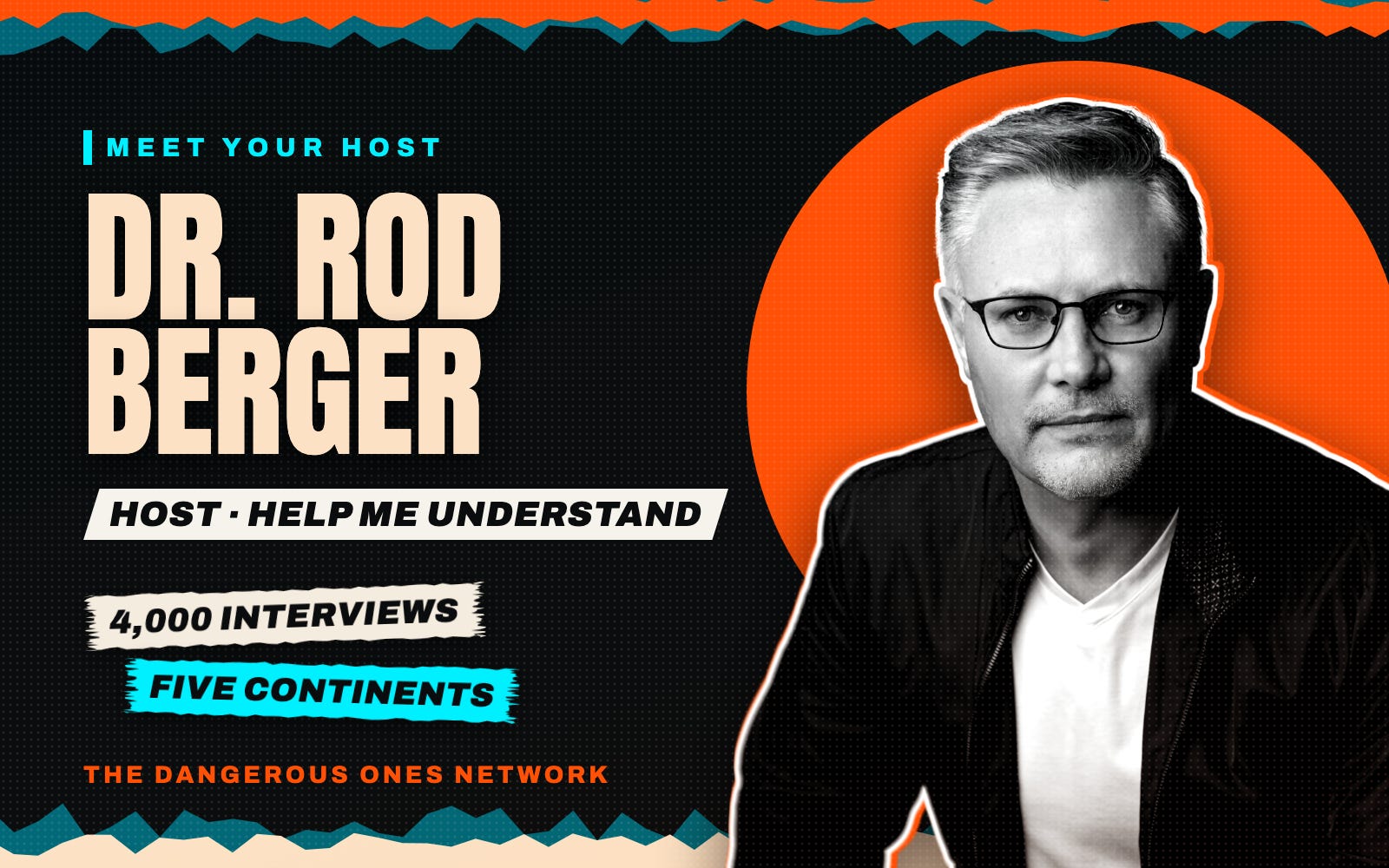
I’ve written for Forbes and Entrepreneur, and I serve as Editor-at-Large at Fair Observer. For nearly two decades, I was a guest lecturer on Storytelling in Business at Vanderbilt’s Owen Graduate School of Management. You’ll find more of my work at drrodberger.com.
Here, my job is narrower. The callers can take a side. I don't. I go looking for where we've seen this before, and I bring back the strongest case each side can make.
Help Me Understand, the podcast
You read the story three times and still can't say what happened. Somewhere in the third read, you stopped caring. You're not shallow. You're tired.
Help Me Understand is my podcast on The Dangerous Ones Network. Each episode takes the stories from the news that make no sense to an ordinary person and asks the question we should be asking and aren’t. No verdict. The reel at the top of this post starts where the show does, with a message someone left on The People’s Hotline.
Latest episode: Persuasion Over Division, with Marshall Herskovitz. His three pillars, the industry of rage, and why fighting isn’t the only way to win.
Also this week: Calling the Bluff, Lives of Quiet Struggle with Marshall Herskovitz, and Ninety Dollars and a Door.
The book
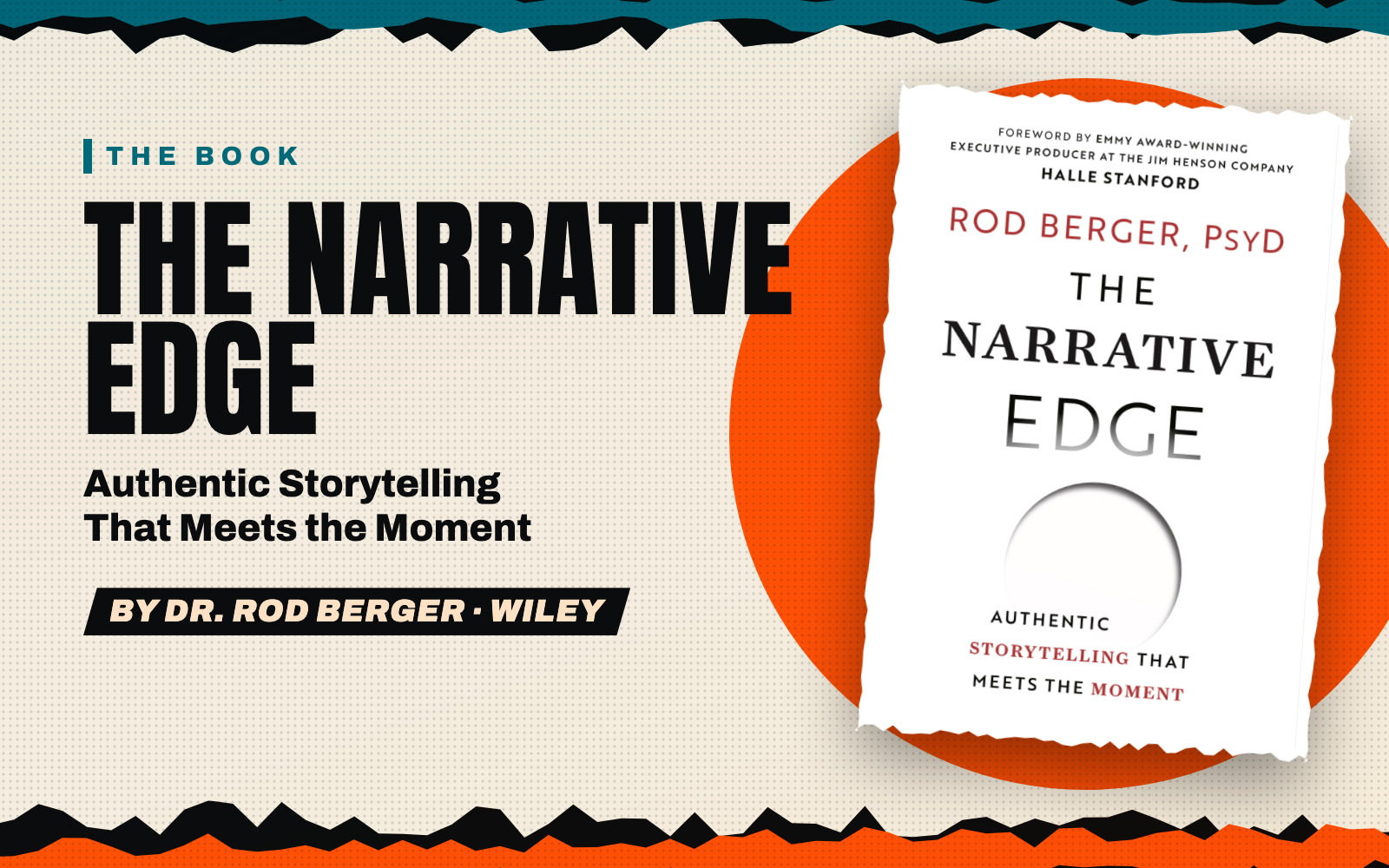
Most of us live inside stories we never chose. Someone handed them to us, and we kept telling them.
The Narrative Edge: Authentic Storytelling That Meets the Moment (Wiley) is my book about learning to see those stories: how a story gets built, whose interests it serves, and what it asks you to do. Help Me Understand brings the same habit to the news.
Watch or listen: Persuasion Over Division
Watch the full conversation on Substack
Help Me Understand with Dr. Rod Berger, on The Dangerous Ones Network. Have something you're trying to understand? Call The People's Hotline and leave a message: 503-212-4600.