


By Dr. Rod Berger
I’m Dr. Rod Berger. On Help Me Understand, you bring the question to The People’s Hotline, and I go find where we’ve seen it before. Some weeks I take the question to my friend Marshall Herskovitz.
Before the story, a question for you. Next week I’ll share how HMU readers answered.
The shirt at the gym
Thursday morning, a few hours before Marshall and I recorded, I saw a man at my gym. White, older than me, wearing a shirt my brain filed as MAGA before I had finished reading it. I didn’t talk to him and I wasn’t going to. But I caught myself, because the label got there before I did.
I told Marshall about it on the air. His answer surprised me. The country needs that man’s side, he said, and he didn’t stop there.
“Democrats went off the rails in 2020. The left side of the Democratic Party went off the rails in 2020.”
Marshall Herskovitz
Without conservatives pushing back, he argued, the left would have kept going. Then he made the harder point. Democrats can win without the man in my gym. They can’t win without the people in the middle.
So help me understand this. Can you respect someone you’ve already decided you don’t need?
Beyond 48 percent
Marshall has a number he brings to every episode. A party that squeaks by with 48 or 49 percent hasn’t won the argument. He reads this month’s results as voters rejecting Donald Trump more than embracing Democrats, and he wants something sturdier.
“We need to create a 55 or 60 percent enduring majority of people who agree with what we stand for.”
Marshall Herskovitz
Three days before we recorded, the New York Times editorial board made a version of his case. Under the headline This Winning Combination Is the Future of American Politics, it described this year’s winning Democrats as “economic populists and cultural moderates.” Marshall has argued for that split for nine years. On the air, he allowed himself a moment of self-congratulation.
Even good things need limits
On immigration, he drew a line I didn’t expect from him. He wants borders, and he wants the people who crossed illegally treated humanely, given a chance to earn citizenship, with criminals deported. His reason fits in a sentence.
“If you drink too much water, you will die.”
Marshall Herskovitz
I pushed on the frame. For decades we sold America to the world as the best and the brightest, the house everyone should want to live in. We benefited from that marketing, economically and in the talent it drew here. Climate migration will move whole populations toward the places that still look like freedom. We built the brand. Now people believe it.
Guardrails
The same idea runs under his economics. Competition always produces abuse, he says, which is why every sport has rules and referees.
“Capitalism needs guardrails in order to function.”
Marshall Herskovitz
His target isn’t capitalism. It’s what he calls 45 years of neoliberalism, where profit became the only measure and health care became a commodity. He parts with Bernie Sanders here. Free buses and free college, he says, aren’t what most Americans want. They want the kind of prosperity that lets them buy what they need, and the upward mobility we barely name anymore.
He also has a theory about California. Days after the election, voters there rejected Proposition 40, a one-time 5 percent tax on residents worth more than a billion dollars. Opponents raised more than $333 million to beat it. Marshall’s reading is simple. Americans want to be wealthy, and we’ve defined winning that way for 250 years.
“Don’t take their money. Don’t take their companies. Take their power.”
Marshall Herskovitz
Who gives up a seat?
This is where I got stuck, and I said so. Everyone agrees with sharing in the abstract. My example was clumsy: a first-class seat, and whether you’d give up one flight in ten so someone else could have it. I’m not sure we’re built to say yes. On a cynical day I wonder whether this is just what happens to a democracy as it ages.
Marshall wouldn’t take the premise.
“For the vast majority of Americans, this would mean them getting more, not getting less.”
Marshall Herskovitz
The only people who lose, he said, are the ones with so much they would barely notice. He agreed with the part of me that worries about human nature. Nobody ever feels they have enough. The fix, as he sees it, isn’t to cure the feeling. It’s to stop letting it run the country.
The dark side of the bright side
Then he said the line I’ve been sitting with since.
“It’s actually hard to be an American for everybody.”
Marshall Herskovitz
Every American, he said, carries a voice that says you haven’t done enough, you haven’t gotten there, it’s your fault. He calls it the dark side of the bright side. The same restlessness that makes this the most inventive country in the world makes it a hard place to feel finished.
The frame I have to watch
I’ll go first. The man at the gym got a label from me before he got a second look, and I host a show that asks you not to do that. Marshall says Democrats can win without him, and he may be right about the math. What I said on the air still holds for me: I have to find a place where I can respect that man’s opinion while I keep my own.
And on the air, I called my own first-class example idiotic. It was easier than defending it. The question underneath it still stands.
Who did you label this week before you knew anything about them?
When you picture the people who would lose if the rules changed, are you one of them?
What number would finally feel like enough, and have you ever said it out loud?
If the voice telling you that you haven’t done enough went quiet, what would you do with your life? Tell me in the comments.
A note on limits: Marshall cited several figures from memory during our conversation, including how many Americans support Democratic policies and how often immigrants commit crimes. We haven’t checked each one, so this newsletter doesn’t repeat them as fact. The Times piece is an editorial, the board’s own opinion.
Meet your host
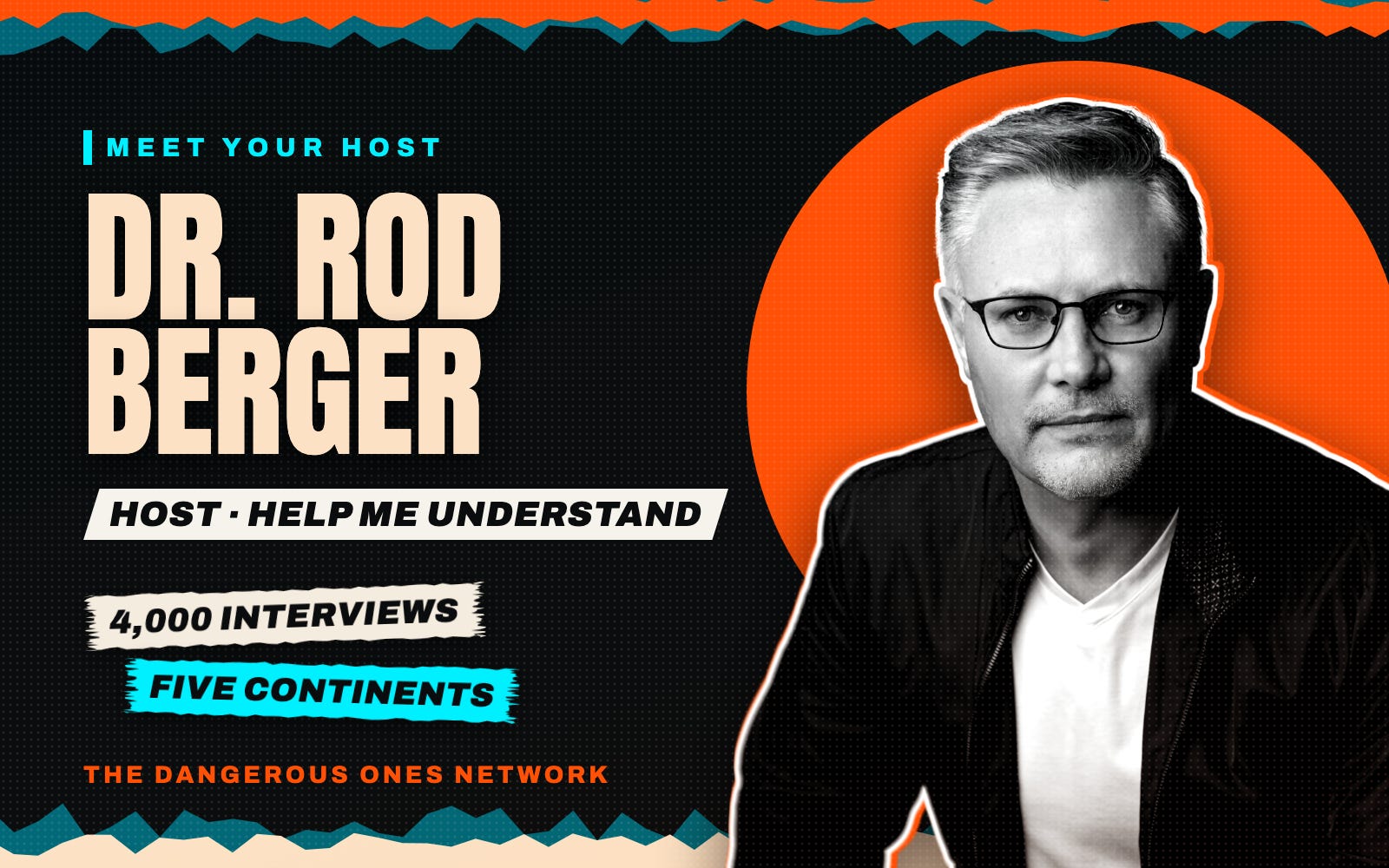
I’ve written for Forbes and Entrepreneur, and I serve as Editor-at-Large at Fair Observer. For nearly two decades, I was a guest lecturer on Storytelling in Business at Vanderbilt’s Owen Graduate School of Management. You’ll find more of my work at drrodberger.com.
Here, my job is narrower. The callers can take a side. I don't. I go looking for where we've seen this before, and I bring back the strongest case each side can make.
Help Me Understand, the podcast
Help Me Understand is my podcast on The Dangerous Ones Network. Each episode takes the stories from the news that make no sense to an ordinary person and asks the question we should be asking and aren't.
Latest episode: Guardrails with Marshall Herskovitz. Capitalism with referees, a majority that lasts, and the dark side of the bright side.
Recent episodes: The Weight Lifted, Who Plays by the Rules Now, The Standard at Home, and Not Their Money, Their Power with Marshall Herskovitz.
The book
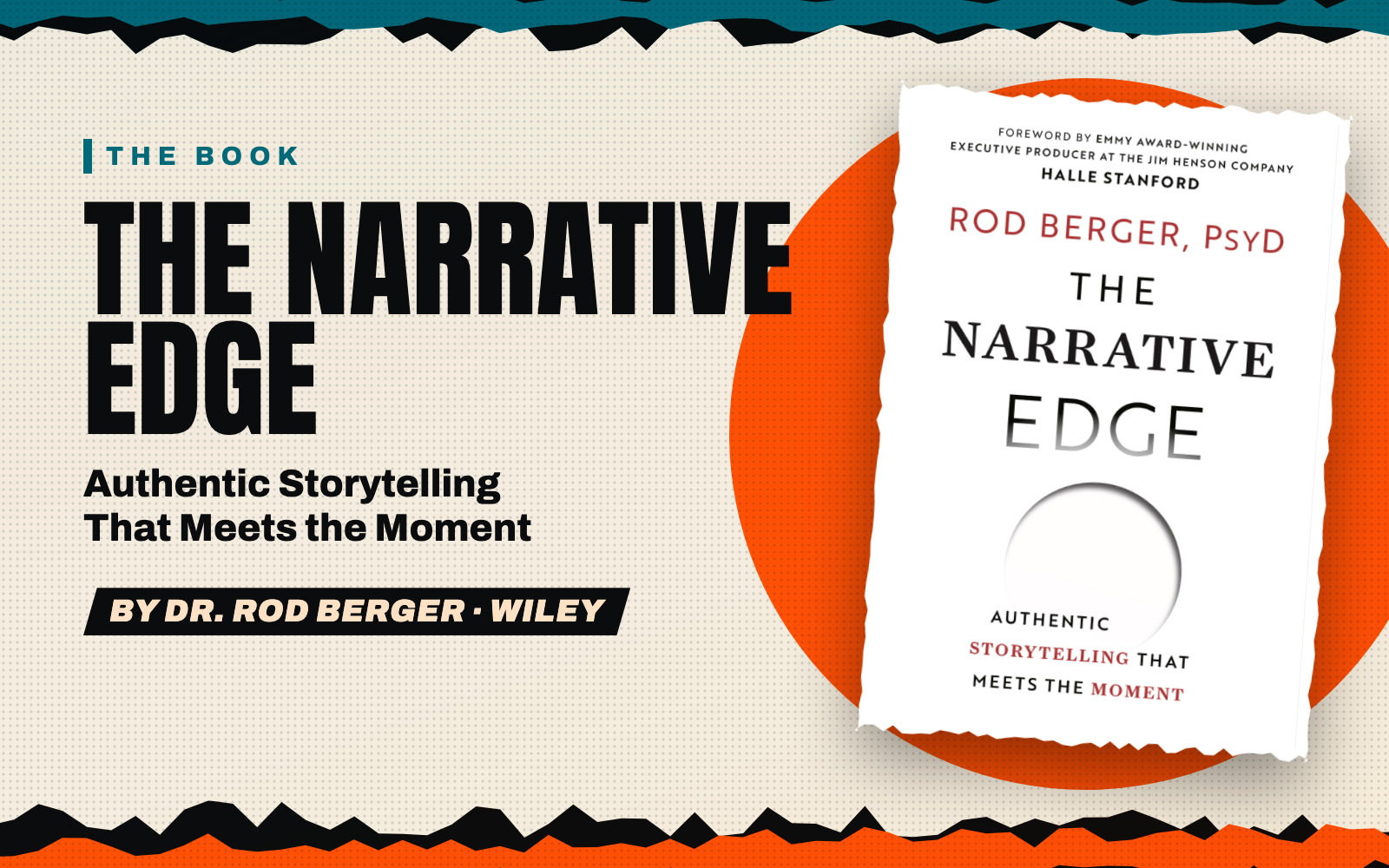
Most of us live inside stories we never chose. Someone handed them to us, and we kept telling them.
The Narrative Edge: Authentic Storytelling That Meets the Moment (Wiley) is my book about learning to see those stories: how a story gets built, whose interests it serves, and what it asks you to do. Help Me Understand brings the same habit to the news.
Watch or listen: Guardrails
Help Me Understand with Dr. Rod Berger, on The Dangerous Ones Network. Have something you're trying to understand? Call The People's Hotline and leave a message: 503-212-4600.