


By Dr. Rod Berger
I’m Dr. Rod Berger. On Help Me Understand, you bring the question to The People’s Hotline, and I go find where we’ve seen it before.
Before the story, a question for you. Next week I’ll share how HMU readers answered.
Who holds the keys
On Thursday, August 1, 1946, Harry Truman signed the Atomic Energy Act. A year after the bomb ended the war, Congress had to decide who would hold the most dangerous thing the country had ever built. It handed the job to a civilian commission and gave that commission a monopoly over atomic research in the United States.
Marshall Herskovitz brought that law into our conversation this week while we were arguing about something else. A run of outages had knocked out email, flights and banking, and you may have lost an afternoon to one of them. On Good Morning America, Sen. Mark Warner said AI tools have turned up so many exploits that companies are forcing patches into systems that were never built to take them all at once. Marshall went further. The companies that built these tools, he said, put something into the world with nothing standing between it and the rest of us.
I pushed back. The toothpaste is out of the tube, I told him. You can’t write controls for something smarter than the people writing them. Marshall’s answer was that we still live here. Then he reached for 1946: private companies did much of the building then too, he said, but they built under federal control, and the country still led the world.
Control first
Eight years later, on August 30, 1954, Dwight Eisenhower signed a rewrite of the law that opened the field to private industry. On December 18, 1957, a utility began sending atomic electricity to homes around Pittsburgh from a plant at Shippingport, Pennsylvania. The order mattered. Control came first, and the market came after.
Marshall has a name for that kind of order. He calls it six chickens and seven eggs: a long chain of things that each have to happen before the next one can. He says every movie he makes runs on one, and that the country is at the start of one right now.
One call
On October 28, a listener left this message on The People’s Hotline:
Another big thing the Democrats need to address is the power of corporations. They are not people. Do away with that idea completely.
Nothing in that message asks for a company to close. The question underneath it is whose voice counts when the rules get written. In 2010, the Supreme Court ruled 5-4 in Citizens United v. FEC that the government could not limit what corporations and unions spend independently in federal elections. Marshall believes only a constitutional amendment can change that. It would take three-quarters of the states to ratify one.
The part that’s on me
I’ll go first. I hand problems to AI all day. I let it find the workaround instead of paying for a service, and I like how fast it moves. Speed is easy to defend when you are the one getting it.
The 1946 story flatters Marshall’s side, and it leaves something out. With the atom under federal control, the United States watched the Soviet Union in 1954 and Britain in 1956 start atomic power plants first. Control has costs. So does its absence. Neither side gets to tell this history as if only the other one paid.
Sit with these
Who do you trust to hold the keys to something none of us can see inside?
When a company tells you a failure was routine, what would it take for you to believe it?
What would you give up so that no single company could switch off your week?
The full conversation with Marshall Herskovitz opens with that hotline call. Watch it here, or listen below.
A note on limits: Marshall’s account of what caused this week’s outages is his theory, not an established cause. The companies involved have pointed to their own errors and routine maintenance. The 1946 and 1954 dates come from the Department of Energy’s history of the Atomic Energy Commission.
Meet your host
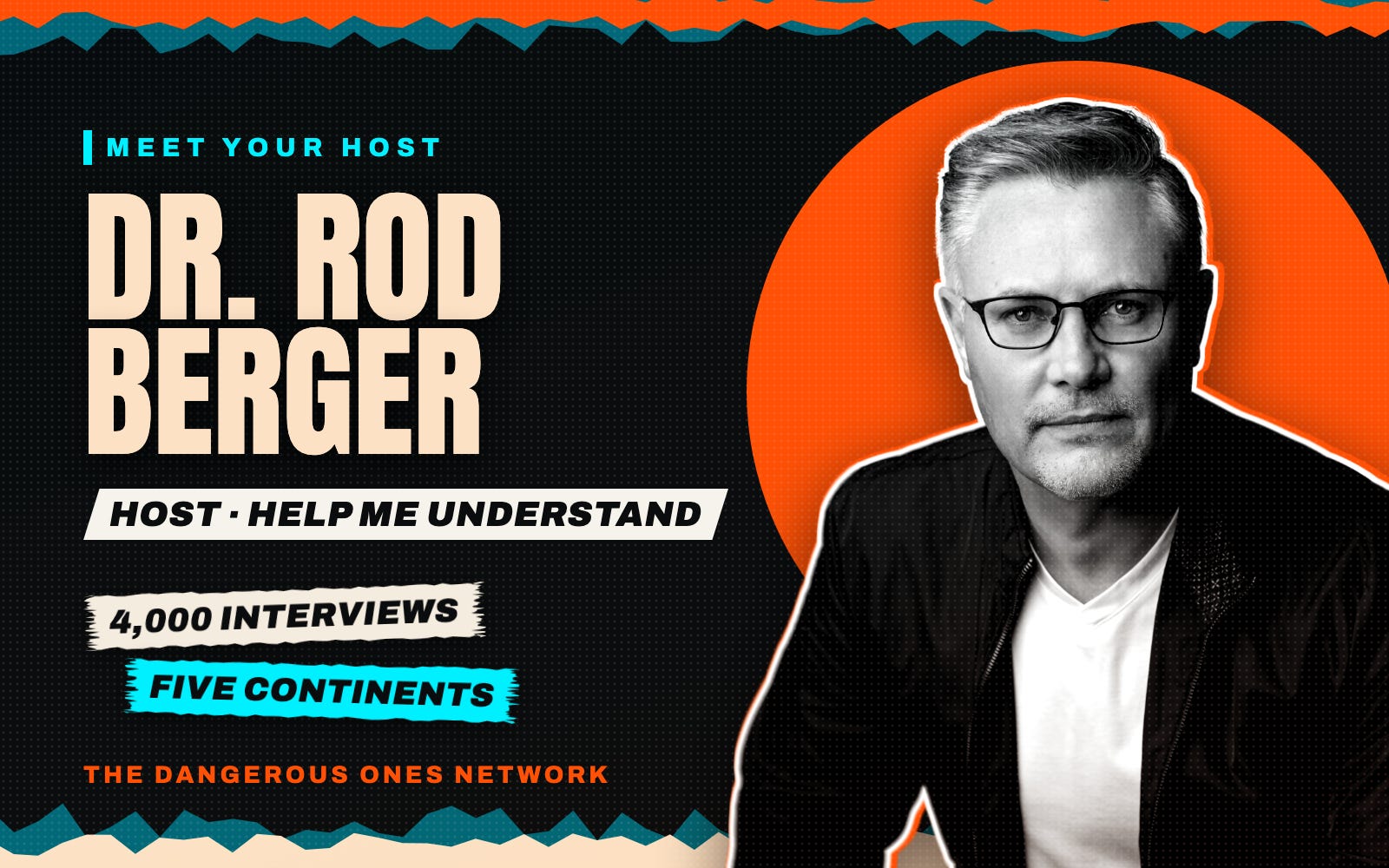
I’ve written for Forbes and Entrepreneur, and I serve as Editor-at-Large at Fair Observer. For nearly two decades, I was a guest lecturer on Storytelling in Business at Vanderbilt’s Owen Graduate School of Management. You’ll find more of my work at drrodberger.com.
Here, my job is narrower. The callers can take a side. I don't. I go looking for where we've seen this before, and I bring back the strongest case each side can make.
Help Me Understand, the podcast
Help Me Understand is my podcast on The Dangerous Ones Network. Each episode takes the stories from the news that make no sense to an ordinary person and asks the question we should be asking and aren't.
Latest episode: Six Chickens, Seven Eggs, with Marshall Herskovitz. Outages, AI, and what Democrats do with a generational opportunity.
Recent episodes: Who Taught Us to Expect the Lights, Guardrails with Marshall Herskovitz, The Weight Lifted, and Who Plays by the Rules Now.
The book
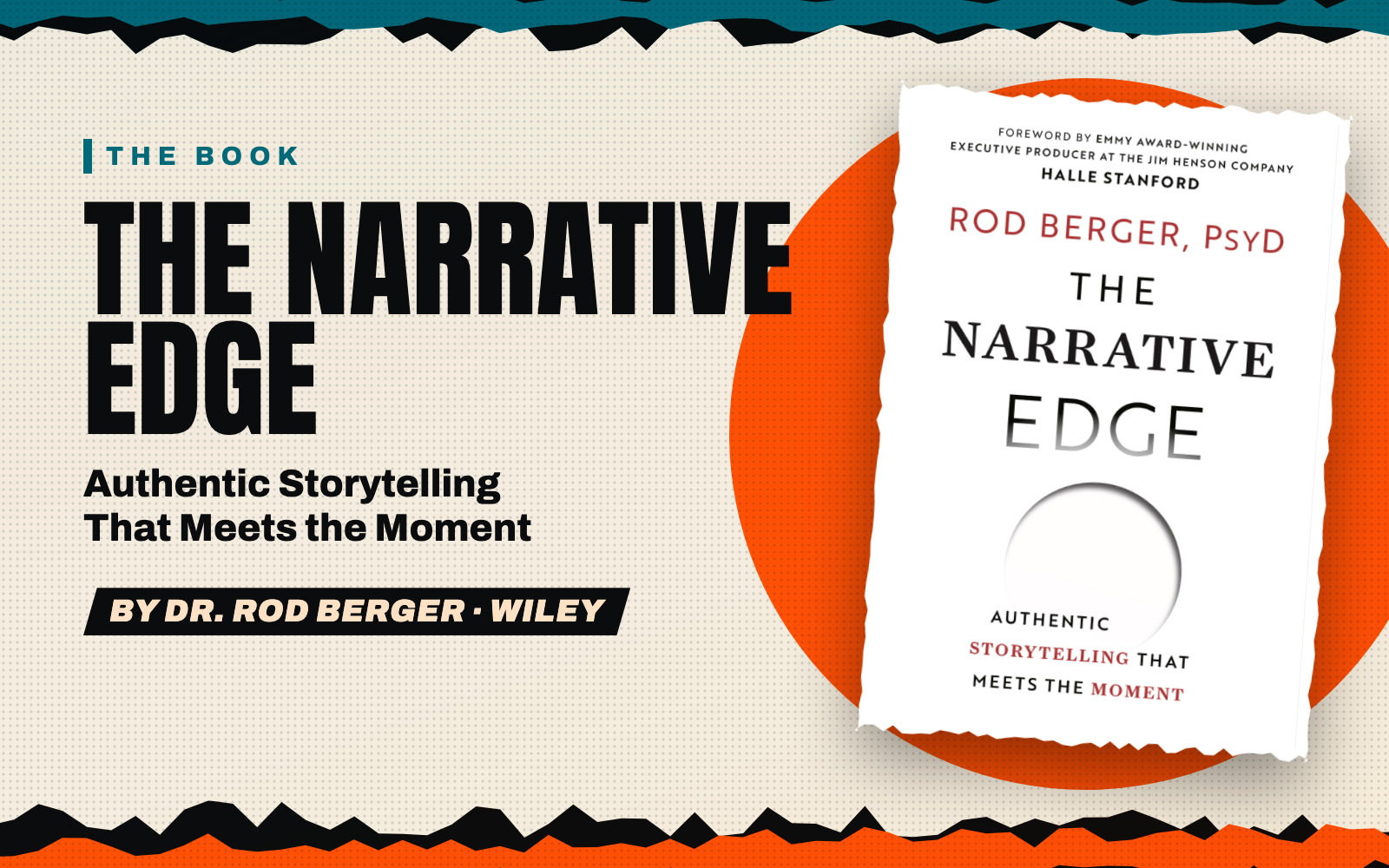
Most of us live inside stories we never chose. Someone handed them to us, and we kept telling them.
The Narrative Edge: Authentic Storytelling That Meets the Moment (Wiley) is my book about learning to see those stories: how a story gets built, whose interests it serves, and what it asks you to do. Help Me Understand brings the same habit to the news.
Watch or listen: Six Chickens, Seven Eggs
Help Me Understand with Dr. Rod Berger, on The Dangerous Ones Network. Have something you're trying to understand? Call The People's Hotline and leave a message: 503-212-4600.