


By Dr. Rod Berger
I'm Dr. Rod Berger. On Help Me Understand, you bring the question to The People's Hotline, and I go find where we've seen it before.
Last week I asked what you do first when you hear a big claim about someone in power. Almost three in four of you, 73 percent, said you look for where it came from. Another 21 percent wait to see if it holds up. Four percent share it if it fits what they already believe, and 2 percent let it go. That's a room that checks before it shares.
Here's this week's question. Next week I'll share how HMU readers answered.
Three days after the election, a listener left this on our hotline. Listen for what you'd expect to hear, and what you don't.
“I am completely giddy. I feel like a weight has been lifted off my shoulders that's been bearing down on it for 2 years. And through a lot of that two years, I've been really afraid that democracy was just… didn't have a chance.”
A caller to The People's Hotline, troubled, on relief after the midterms
It starts giddy, and within a breath it's talking about two years of being afraid. We heard that turn, from joy to the weight underneath it, again and again that week.
On election night in Austin, Gina Hinojosa became the first Democrat elected governor of Texas in more than thirty years. She told her supporters:
“It never bothered me that they doubted me. It bothered me that they doubted us.”
Gina Hinojosa, Texas governor-elect, November 3, 2026
You can hear it in both of them. Not a party. Relief.
The busiest day the line has had
Thursday, November 5, The People's Hotline took 127 calls. That's the most it has ever taken in one day. The next highest is 98. In the four weeks before the election, the line averaged about 43 calls a day.
And the jokes stopped. In those four weeks before the election, about a quarter of the calls we could read came in tagged funny, 25 percent. In the week after, it was 15 percent. Funny is usually the most common tag on this line. That week it fell to third.
So help me understand this. Why would the side that won stop laughing?
Same label, different tears
Start with how we count, because the count can fool you. Every call that comes in gets a tone label from the hotline's software, and we sort those labels into four groups: warm, troubled, critical and flat.
The label that jumped after the election is Emotional. In the four weeks before, it sat on 8.7 percent of the calls we could read. In the week after, it was 19.9 percent, about one in five. Emotional files under troubled, and troubled usually means worry. So on paper, the room got more worried the week its side won.
Then you read the calls.
“I'm not a tearful person… I'm tearing up.”
“I lost 3 days of sleep from being ecstatic.”
“This is the first morning I woke up and I felt that release.”
Callers to The People's Hotline, the week after the election
Same label. A different feeling. It wasn't worry. It was relief.
Here's the fair objection. Maybe I'm reading tears into a tag. One week, a few hundred calls, and software that can't tell a happy cry from a sad one. That's true, and it's why I'm not giving you a number for relief. I'm giving you their words.
Joy is about what you got. Relief is about what you were carrying.
Four pleases in thirteen seconds
Five days after the election, someone called from Texas. The whole message runs thirteen seconds.
“As a resident in Texas, thank God we're finally blue. Please, let's stick to it. Please, please, please.”
A caller to The People's Hotline, on Texas
Four pleases in thirteen seconds. That's someone holding something they're afraid to drop. The weight comes off your shoulders, and the first thing you feel is how heavy it was. The second thing you feel is whether it's coming back. This caller is asking Texas to stay.
An hour after the interview
On November 8, 60 Minutes aired Ross Douthat's interview with the president. Douthat asked whether, after a midterm defeat like this, he expected to fire anyone. The president said he loved his cabinet and might make a few changes. Then CBS told viewers what happened next. An hour after the conversation, the president replaced Susie Wiles, his chief of staff, with her deputy, Stephen Miller, whom CBS called “the architect of the president's mass deportation policy.” CBS added that the move “seems to conflict with the president's professed desire to work with Democrats on immigration.”
Read the timing. The week our callers were setting the weight down, the White House put the architect of that policy in the chief of staff's chair. In the same interview, the president had said the deportations reached people with good jobs and called it “a tough thing.”
Our line heard it. On the night of November 9, a listener left this.
“I am completely destroyed by the idea of Stephen Miller being the, oh God, just having him.”
A caller to The People's Hotline, on the new chief of staff
At home, if you said the rules had gotten too tough and then put the strictest person in the house in charge of them, your family would notice. Relief has a short shelf life when the other side gets to make the next move.
The other room
That same election night, Ken Paxton lost the Texas Senate race to James Talarico. He told his supporters:
“We've had a difficult night tonight across the country, but it's not over.”
Ken Paxton, November 3, 2026
That's the other room. They didn't get relief that night. They got a promise that it isn't finished. And plenty of the people in that room are your neighbors. Some of them went to bed afraid of the very thing our callers had just stopped fearing. “It's not over” sounds like hope to one room and a threat to the other.
There's a fair point inside his sentence, too. In a democracy it never is over. That's the design. The rule that gave our callers their relief gives his supporters their next chance. You can't want one without the other.
Relief takes words, too
Our callers seemed to know before anyone told them that none of this is a finish line. They called to set something down, and they talked longer. In the four weeks before the election, 10 percent of the calls we could read ran past three minutes. In the week after, 14.5 percent did.
Worry takes more words. It turns out relief does too. The room didn't stop laughing because something went wrong. It stopped because it finally set something down, and nobody tells jokes while they're catching their breath.
The frame I have to watch
This show does better when the room is emotional. Tears, relief, four pleases in thirteen seconds: that's the material I build episodes from. I benefit from the weight you carry, and I should say so out loud.
Relief is honest, and it's also a little dangerous. It's the feeling right before people decide they've earned something. Some of the calls that week had already moved from relief to revenge. If you felt it, notice how fast it wanted to turn into something else.
What were you carrying for two years that you didn't know was heavy until it came off?
Who in your house carried it with you, and have you ever told them so?
When something you feared doesn't happen, how long do you let yourself feel it before you start watching for the next thing?
A caller from Texas said please four times in thirteen seconds. If you knew the people in charge were listening, what would you say please for? Tell me in the comments.
A note on limits: This is one week, and 286 calls we could read out of 413 that came in. A filter blocked 28.6 percent of that week's calls before anyone heard them, probably the angriest first. The tone tags come from the hotline's software, and they can't tell a happy cry from a sad one. It's the room that called. It isn't the country.
Meet your host
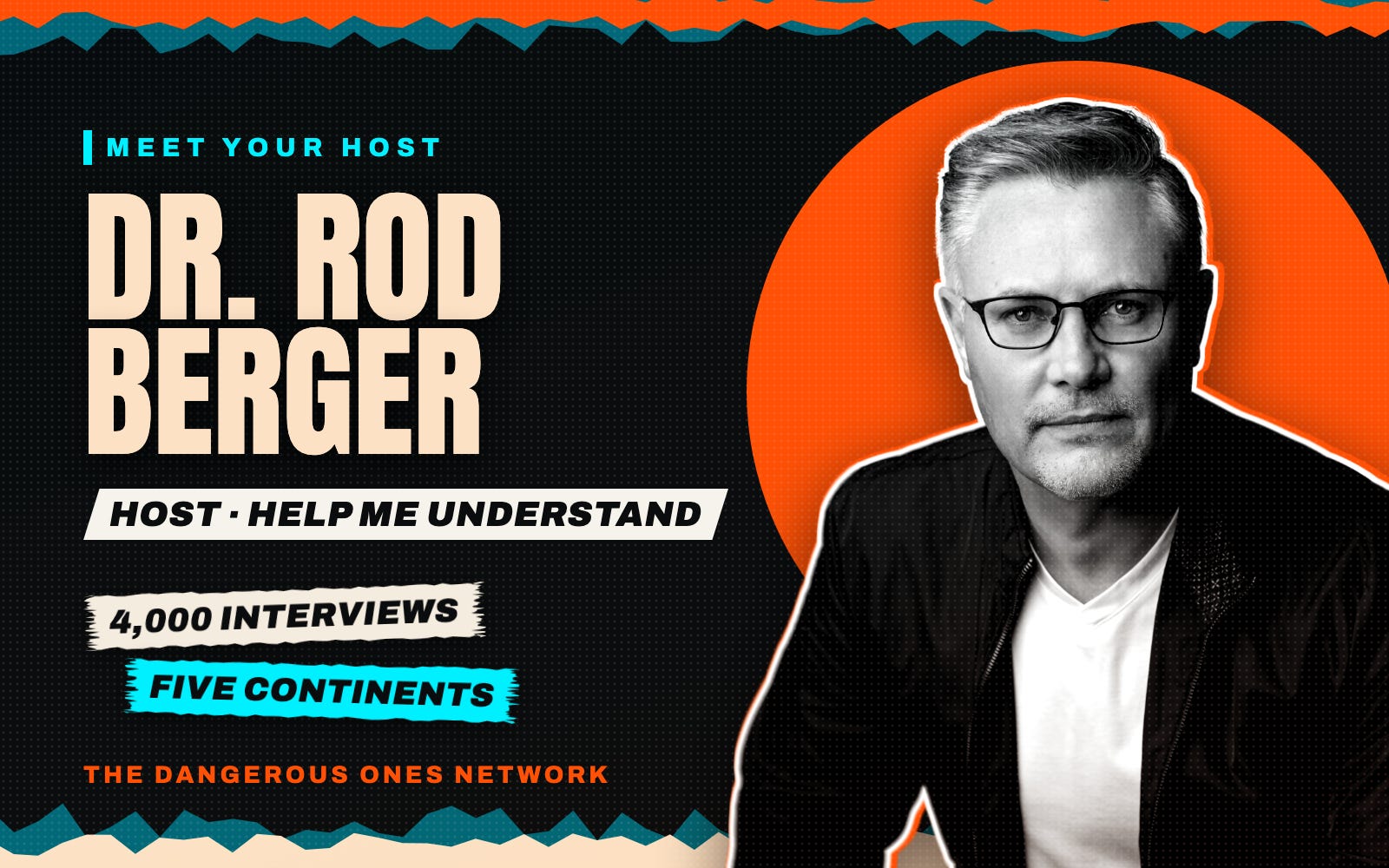
I’ve written for Forbes and Entrepreneur, and I serve as Editor-at-Large at Fair Observer. For nearly two decades, I was a guest lecturer on Storytelling in Business at Vanderbilt’s Owen Graduate School of Management. You’ll find more of my work at drrodberger.com.
Here, my job is narrower. The callers can take a side. I don't. I go looking for where we've seen this before, and I bring back the strongest case each side can make.
Help Me Understand, the podcast

Help Me Understand is my podcast on The Dangerous Ones Network. Each episode takes the stories from the news that make no sense to an ordinary person and asks the question we should be asking and aren't.
Latest episode: The Weight Lifted. The busiest week in the hotline's history, the jokes that stopped and the relief underneath the tears.
Recent episodes: Who Plays by the Rules Now, The Standard at Home, Not Their Money, Their Power with Marshall Herskovitz, Who Stayed Home, and The Weeks In Between.
The book

Most of us live inside stories we never chose. Someone handed them to us, and we kept telling them.
The Narrative Edge: Authentic Storytelling That Meets the Moment (Wiley) is my book about learning to see those stories: how a story gets built, whose interests it serves, and what it asks you to do. Help Me Understand brings the same habit to the news.
Watch or listen: The Weight Lifted
Help Me Understand with Dr. Rod Berger, on The Dangerous Ones Network. Have something you're trying to understand? Call The People's Hotline and leave a message: 503-212-4600.
we believe,
we showed up
We won a chance to right the ship
Now we see the damage
It’s gonna take more work
Stay the course or suink